Protecting Your Family’s Digital Life
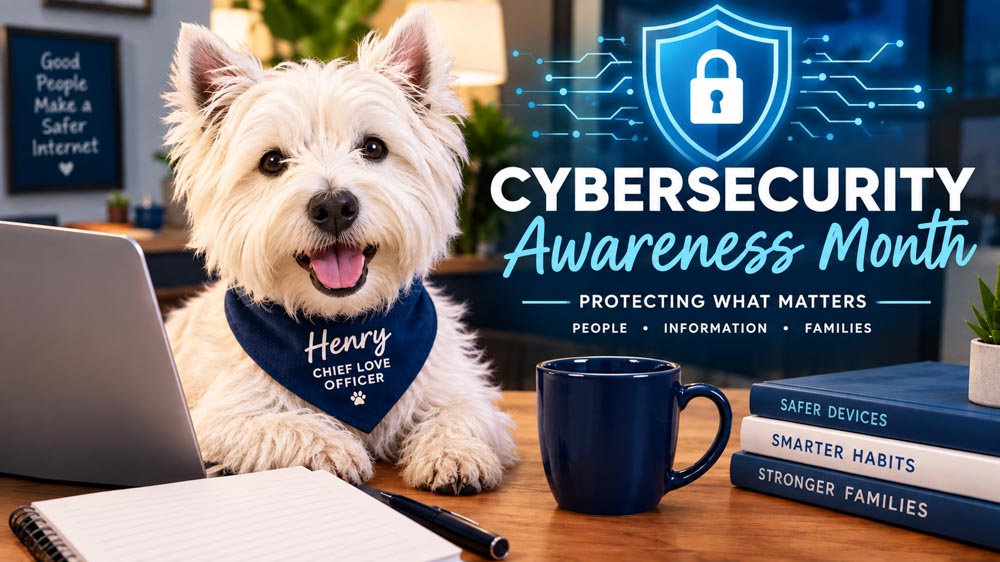
October is Cybersecurity Awareness Month, and this year, we’re spending the next four weeks talking about something that has become increasingly important to individuals and families: protecting the people, information, and assets that matter to us.
When people hear the word cybersecurity, they may picture computer programmers, complicated software, or a company’s IT department.
But cybersecurity is not just a technology issue.
Every day, we use phones and computers to access bank accounts, communicate with loved ones, manage medical appointments, shop, pay bills, store photographs, manage investments, and keep track of important documents. Our digital lives have become deeply connected to our financial lives and our everyday lives.
That means protecting those accounts and devices is part of protecting ourselves and the people we care about.
Four Weeks of Cybersecurity Education
Throughout October, we’ll be focusing on four areas that we believe are especially important for families:
- Week 1: Protecting your everyday digital life
- Week 2: Recognizing scams and their warning signs
- Week 3: Understanding your digital assets as part of your overall planning
- Week 4: Knowing what to do if you or someone you love has been scammed
We’ll also be providing practical checklists and resources along the way because cybersecurity education should be something you can actually use.
Why Cybersecurity Matters to Families
A stolen password may sound like a small problem.
It may not be.
If someone gains access to an email account, for example, they may be able to learn about other accounts, reset passwords, impersonate the account holder, or use information found in emails to make a scam seem more convincing.
Financial accounts can be even more concerning.
A scammer who gains access to banking or investment information may be looking for money. Someone who obtains personal information may be looking for an opportunity to commit identity theft or impersonate the victim.
And scammers do not necessarily need sophisticated hacking skills to cause damage.
Sometimes, all they need is for someone to click the wrong link, share a verification code, or believe a convincing story.
That is why Cybersecurity Awareness Month is about more than computers. It is about awareness, preparation, and good habits.
Four Simple Steps Can Make a Difference
CISA’s Secure Our World guidance encourages individuals and families to focus on four basic behaviors: recognizing and reporting phishing, using strong passwords, turning on multifactor authentication, and keeping software updated.
- Use Strong, Unique Passwords
- Using the same password for multiple accounts can create a chain reaction.
- If one account is compromised and that password is reused elsewhere, other accounts may become easier to access.
- Consider using a password manager to create and securely store unique passwords.
- Turn On Multifactor Authentication
- Multifactor authentication, often called MFA or two-factor authentication, adds another layer of protection.
- Instead of relying only on a password, an account may also require a code, an authentication app, a fingerprint, or another form of verification.
- Start with your most important accounts, especially email, banking, and financial accounts.
- Keep Your Devices Updated
- Those software-update notifications can be annoying.
- They are also important.
- Software updates can include security fixes that address known vulnerabilities. When possible, turn on automatic updates and keep your devices current.
- Learn to Recognize Phishing
- Phishing is an attempt to trick someone into clicking a malicious link, opening an attachment, or providing personal information.
- The message might claim:
- Your bank account has a problem.
- A payment did not go through.
- Your package could not be delivered.
- Your password needs to be reset.
- Your account will be closed.
- Someone needs you to verify your identity.The goal is to make the message feel urgent enough that you act before you stop to think.
That is why one of the best cybersecurity habits is surprisingly simple:
Pause.
Before clicking, paying, responding, or giving someone information, take a moment to verify what is happening.
Make Cybersecurity a Family Conversation
Cybersecurity should not become another topic families only discuss after something goes wrong.
Talk about it ahead of time.
Families can agree that if someone receives an alarming call claiming that a family member needs money immediately, they will contact another trusted family member before sending anything.
You can also decide how family members should verify an unusual request.
That can be especially helpful when scammers use personal information to make their stories sound believable.
Start With One Small Step
You do not have to overhaul your entire digital life in one afternoon.
- Choose one account.
- Turn on MFA.
- Update one important password.
- Install the pending software update.
- Talk to your family about what you will do if someone receives a suspicious call.
Small steps add up.
Follow Along With Us This October
This is just the beginning of our Cybersecurity Awareness Month series.
Over the next four weeks, we’ll be sharing practical information about cybersecurity, scams, digital assets, and what families can do when something goes wrong.
We’ll also be providing educational handouts you can print, save, and share with the people you love.
Because cybersecurity may involve technology, but at its heart, it is about protecting the people, information, and resources that matter to you.
Download our free Family Cyber Security Checklist
Contact Robert M. Goldberg & Associates today at 770-229-5729 to schedule a Consultation.
Watch our free webinar, and learn more about Estate Planning!


